Key takeaways
- Good projects start by understanding your processes, not the technology.
- Start small with a quick win, then expand.
- Ongoing monitoring keeps automations accurate and effective.
Step 1: Discovery
We learn how your business works: where leads come from, how they’re handled, which tasks eat up time and which tools you use.
Step 2: Opportunity map
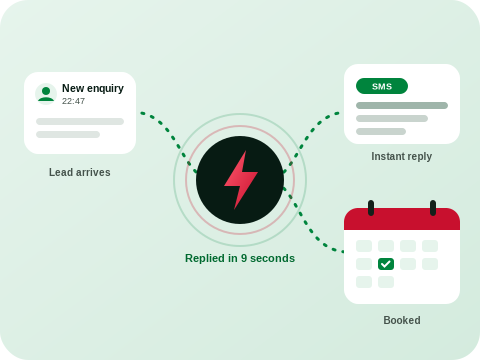
We list potential automations and rank them by impact versus effort. Usually the first project is a quick win, like instant lead replies or reactivating old leads.
Step 3: Design
We map the conversation flows and workflows: what the AI says, how it qualifies, when it hands over to a human, and what happens to the data.
Step 4: Build and connect
We build the automation and connect it to your CRM, calendar, email, SMS and website.
Step 5: Test
We test with real scenarios, check tone and accuracy, and make sure it handles edge cases politely.
Step 6: Launch and monitor
We go live, watch results closely and fine-tune.
Step 7: Expand
Once the first automation proves itself, we move on to the next opportunity.
Related: AI automation ROI · AI automation services